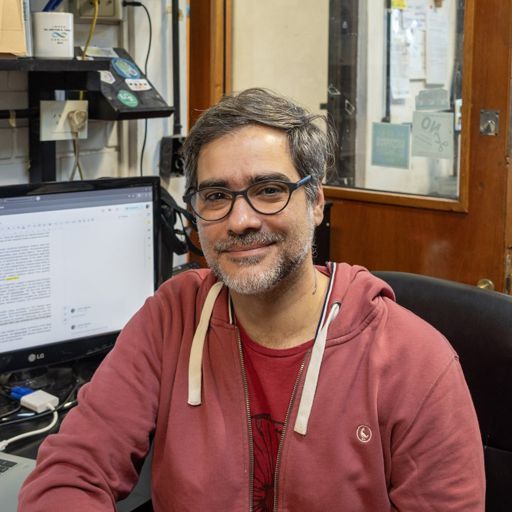
A BIOSENSING PLATFORM FOR MONITORING WATER CONTAMINANTS
Investigador Asistente del CONICET
Frequent monitoring of contaminants in water bodies is essential to ensure safe access to water for human consumption, livestock use, and recreational activities. Traditional analytical methodologies often involve high costs associated with instrumentation, sample transportation, and processing. Therefore, there is a need for alternative methods that are low-cost, simple, portable, and rapid.
Our goal is to develop a user-friendly, cost-effective biosensing platform for environmental monitoring. In this presentation, I will summarize recent progress in the detection of two contaminants of particular regional concern.
The SensAr project involves a whole-cell bacterial biosensor for arsenic detection. The current prototype enables visual detection of low arsenic concentrations without the need for specialized equipment, using paper-based formats and lyophilized cells.
In parallel, the CIANOTOX project focuses on the detection of microcystins—cyanobacterial toxins—through an enzymatic assay based on the inhibition of protein phosphatase 1. To enhance sensitivity, we engineered PP1 mutants with increased affinity for the toxin.
These developments aim to provide accessible, field-deployable tools to support environmental surveillance efforts in resource-limited or decentralized contexts.